Replacing a missing tooth involves more than filling the visible space. A dental implant provides support beneath the gumline, while an implant crown restores the part of the tooth that you see when smiling, speaking, or chewing. If you are considering implant crowns in Victoria, understanding how the components connect can make the process easier to follow. The crown is not placed directly into the jawbone. Instead, it attaches to a small connector called an abutment, which joins it to the implant. Each part has a distinct role, and careful planning helps the finished restoration fit your bite and surrounding teeth.
What Is an Implant Crown?
An implant crown is a custom-made replacement tooth attached to a dental implant. It restores the visible portion of a missing tooth and is shaped to suit the space and surrounding teeth.
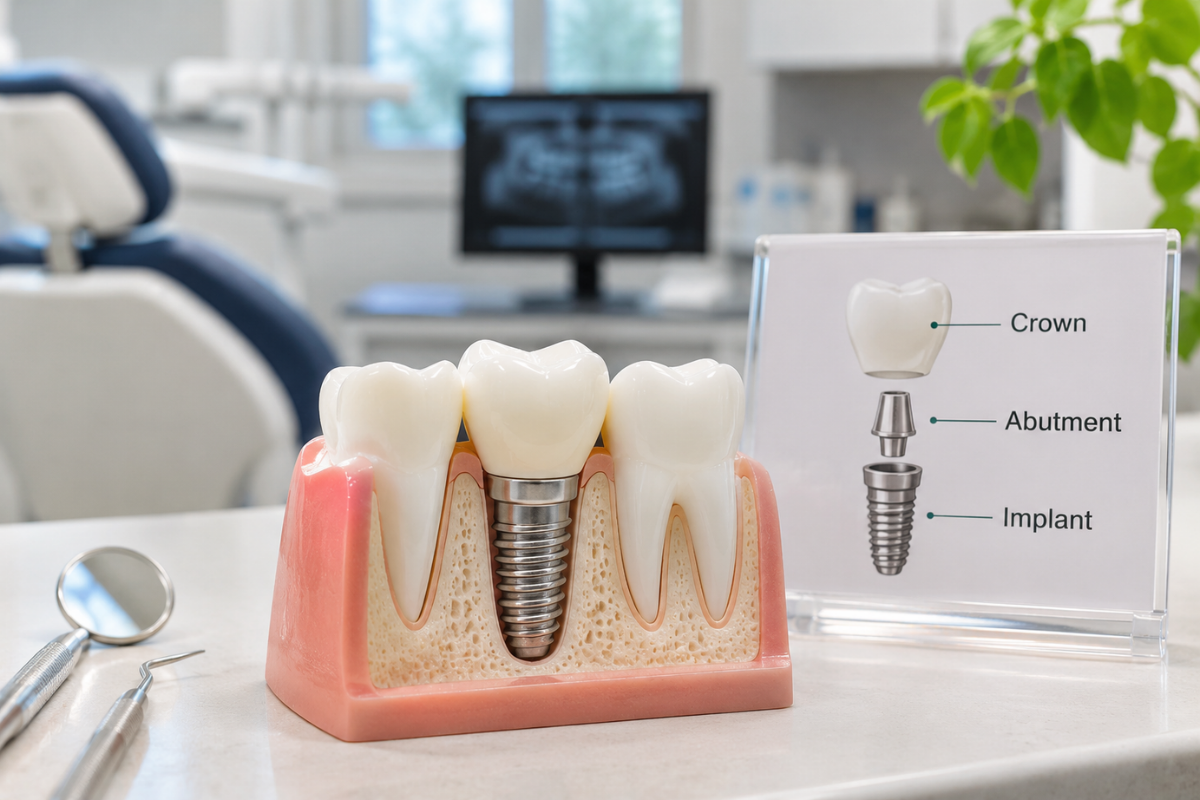
A single-tooth restoration usually has three parts:
- Implant Fixture: A small post, often made from titanium, placed in the jawbone to act as an artificial root.
- Abutment: A connector attached to the implant that supports the crown.
- Implant Crown: The visible replacement tooth that restores the appearance and function of the missing tooth.
The implant provides the foundation, the abutment joins the components, and the crown completes the restoration. This distinction matters because a concern may involve the crown, its attachment, or the implant itself.
How Does the Implant Crown Process Work?
Treatment takes place in stages. The sequence depends on whether an implant is already in place and how the surrounding tissues heal.
- Examination and Planning: The dentist reviews your dental history, checks gum health and bite alignment, and assesses the missing-tooth area. X-rays or other imaging may be used when clinically indicated.
- Implant Placement: If needed, a qualified dental professional places the implant fixture in the jawbone. Who completes this stage depends on the treatment plan and the clinicians involved.
- Healing and Integration: The bone gradually bonds with the implant through osseointegration. This creates the support needed for the crown. Healing time varies, so readiness is assessed clinically rather than by a fixed date.
- Crown Fitting: Once the implant is ready, records help guide the crown’s shape and fit. The abutment and crown are connected, and the bite is checked to ensure comfortable contact with the adjacent teeth.
When considering implant crowns near you, remember that the visible crown may be only one part of a longer process. Some people need implant placement first; others already have an implant and are ready to plan the crown.
Who May Be Suitable for an Implant Crown?
An implant crown may be considered when the implant is stable, and the surrounding tissues can support the restoration. A dentist in Victoria can assess factors such as:
- Bone Support: Adequate jawbone is needed to support the implant. Additional assessment or preparation may be needed if bone volume is limited.
- Gum Health: Active gum disease should be evaluated and managed because the tissues around an implant need ongoing care.
- Bite Forces: Clenching, grinding, or an uneven bite may place extra pressure on the restoration.
- General Health: Certain health conditions, medications, and smoking can influence healing and maintenance.
If an implant is not suitable, a bridge or removable replacement may be discussed. The decision depends on the location of the missing tooth, oral health, and personal preferences.
How Long Can an Implant Crown Last?
An implant crown can remain functional for many years, but there is no guaranteed lifespan. The crown may wear, chip, loosen, or need replacement even when the implant remains integrated with the bone.
Durability is affected by the material, fit, chewing forces, oral hygiene, and grinding habits. A dentist near you can check the crown, attachment, bite, and surrounding gum tissue during regular examinations.
Arrange an assessment if the crown feels loose, your bite changes, or you notice persistent soreness, swelling, or bleeding around the implant. These signs do not automatically mean the implant has failed, but they should not be ignored. Do not try to tighten or adjust the restoration yourself.
How Should You Care for an Implant Crown?
An implant crown needs daily cleaning. Plaque can collect around the gumline and between the restoration and neighbouring teeth, so careful brushing and interdental cleaning are important.
Helpful habits include:
- Brush twice daily with fluoride toothpaste and a soft-bristled toothbrush.
- Clean between teeth and around the implant with suitable floss or interdental tools.
- Follow any additional cleaning instructions for your restoration.
- Avoid using your teeth to open packages or bite very hard objects.
- Attend routine examinations so the crown, bite, and gum health can be monitored.
Consistent care helps keep the implant area clean and makes it easier to detect early changes. It does not make the restoration immune to wear.
Planning for a Confident Next Step
An implant crown restores the visible part of a missing tooth, while the implant and abutment provide its support. Understanding how these parts work together can help you make informed decisions about treatment and maintenance.
Schedule a consultation with Eagle Creek Village Dental Centre to discuss replacing a missing tooth and whether an implant crown may suit your oral health needs. A clear assessment can help you understand your options and the stages involved.
FAQs
What is an implant crown?
An implant crown is the visible replacement tooth attached to a dental implant through an abutment. It is designed to restore the shape and function of a missing tooth. The crown is made to fit the available space and work with the surrounding teeth.
How do implant crowns work with dental implants?
The implant fixture sits in the jawbone and acts as an artificial root. An abutment connects the fixture to the crown above the gumline. Once the implant has integrated with the bone and the restoration is fitted, the crown helps restore biting and chewing function.
How long do implant crowns last?
There is no fixed lifespan for an implant crown. Its durability depends on the material, fit, bite forces, oral hygiene, and habits such as grinding. The crown may need repair or replacement over time, even if the implant remains stable in the jawbone.
How do I care for an implant crown?
Brush twice daily with fluoride toothpaste and clean carefully between the teeth, including around the restoration. Follow any specific cleaning instructions for the implant area. Regular dental reviews help monitor the crown, its attachment, the bite, and the health of nearby gums.